Last month, I had the opportunity to speak at the Estonian Research Council’s conference celebrating 30 years of the Marie Skłodowska-Curie Actions (MSCA). The event brought together researchers, supervisors, institutional representatives and policymakers to reflect on the impact of MSCA on both research careers and research organisations. One of the recurring themes throughout the day was MSCA career development and the ways in which fellowships can shape researchers’ trajectories long after the funding period has ended.
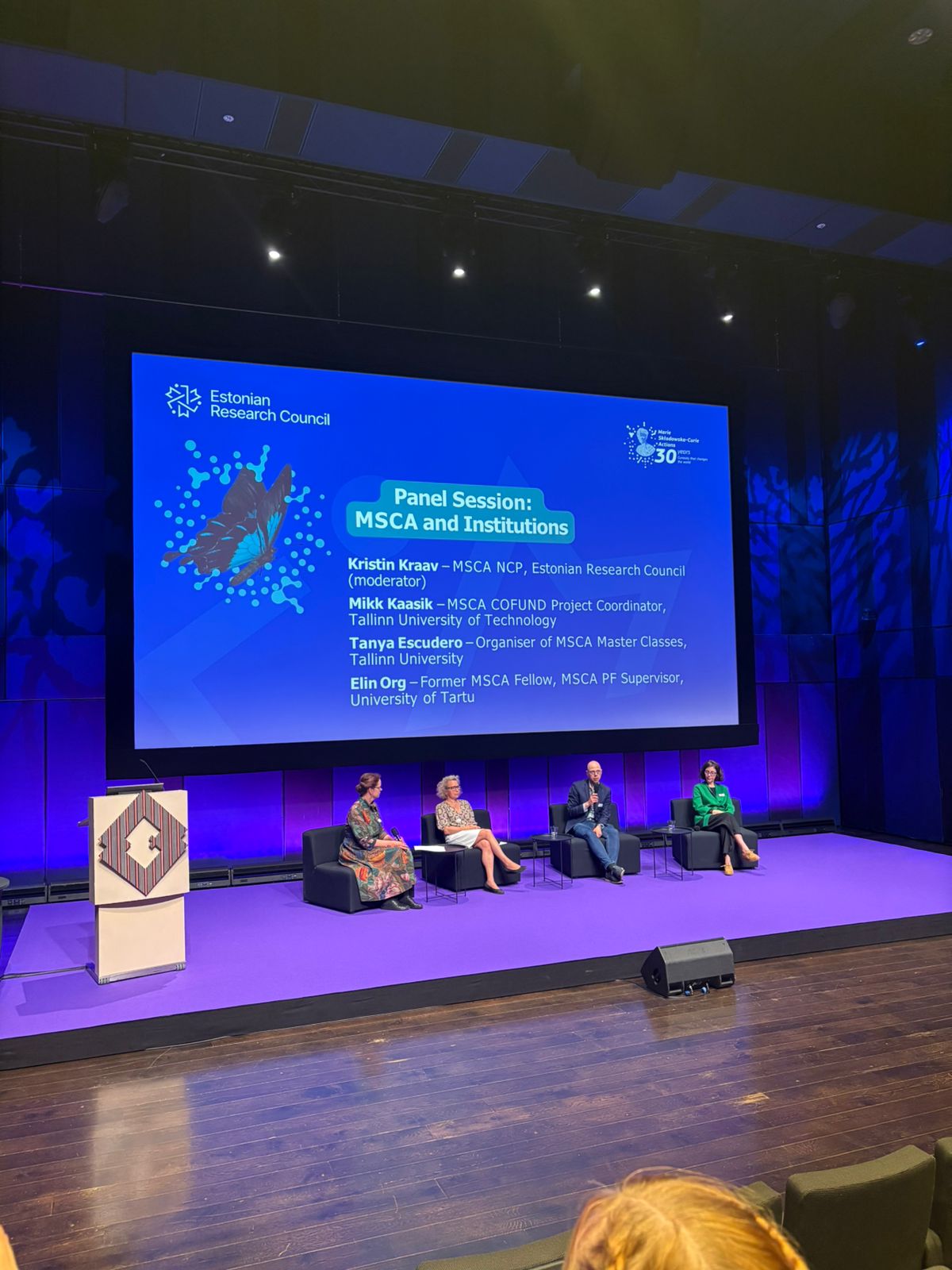
During the first panel, moderated by Kristin Kraav, I shared the experience of Tallinn University’s MSCA Postdoctoral Fellowship initiative and the lessons learned from several years of supporting international researchers through the application process. The discussion focused on how institutions can play a more active role in attracting international talent and supporting competitive applications.
Later in the day, one of the presentations that particularly resonated with me was given by Anu Noorma, former Director General of the Estonian Research Council and herself a former MSCA fellow. Among many interesting points, one message stayed with me: every researcher who chooses Estonia represents a potential asset for the country’s research system.
This may sound obvious, but it is worth reflecting on. Considerable effort is often invested in attracting researchers, preparing applications and securing funding. However, beyond recruitment, the real challenge is how institutions support researchers once they arrive and, perhaps even more importantly, how they help them prepare for the next stage of their careers. This is a question I have been thinking about for some time. After all, career development is one of the central objectives of MSCA Postdoctoral Fellowships and many other postdoctoral schemes.
In recent years, Tallinn University’s School of Humanities has welcomed 18 postdoctoral researchers through different funding schemes. As institutions become increasingly successful in attracting international talent, it becomes equally important to think about how researchers are supported during and after their fellowship period. This is especially relevant at the postdoctoral level, since postdoctoral researchers work on fixed-term contracts, move internationally and face a great deal of uncertainty about their future.
This is one of the reasons why I am currently involved in developing a training programme for postdoctoral researchers at Tallinn University through the Project Support Office. The initiative builds on needs that have emerged repeatedly while working with postdoctoral candidates and fellows on their proposals and career plans. It also draws on the European Competence Framework for Researchers, which emphasises not only research excellence but also leadership, collaboration, and communication, among other areas.
Funding is important, but so are mentoring, professional development opportunities, integration into research communities and access to broader career pathways both within and beyond academia. If we want international researchers to contribute fully to our institutions and research systems, supporting their development cannot begin and end with the grant application.