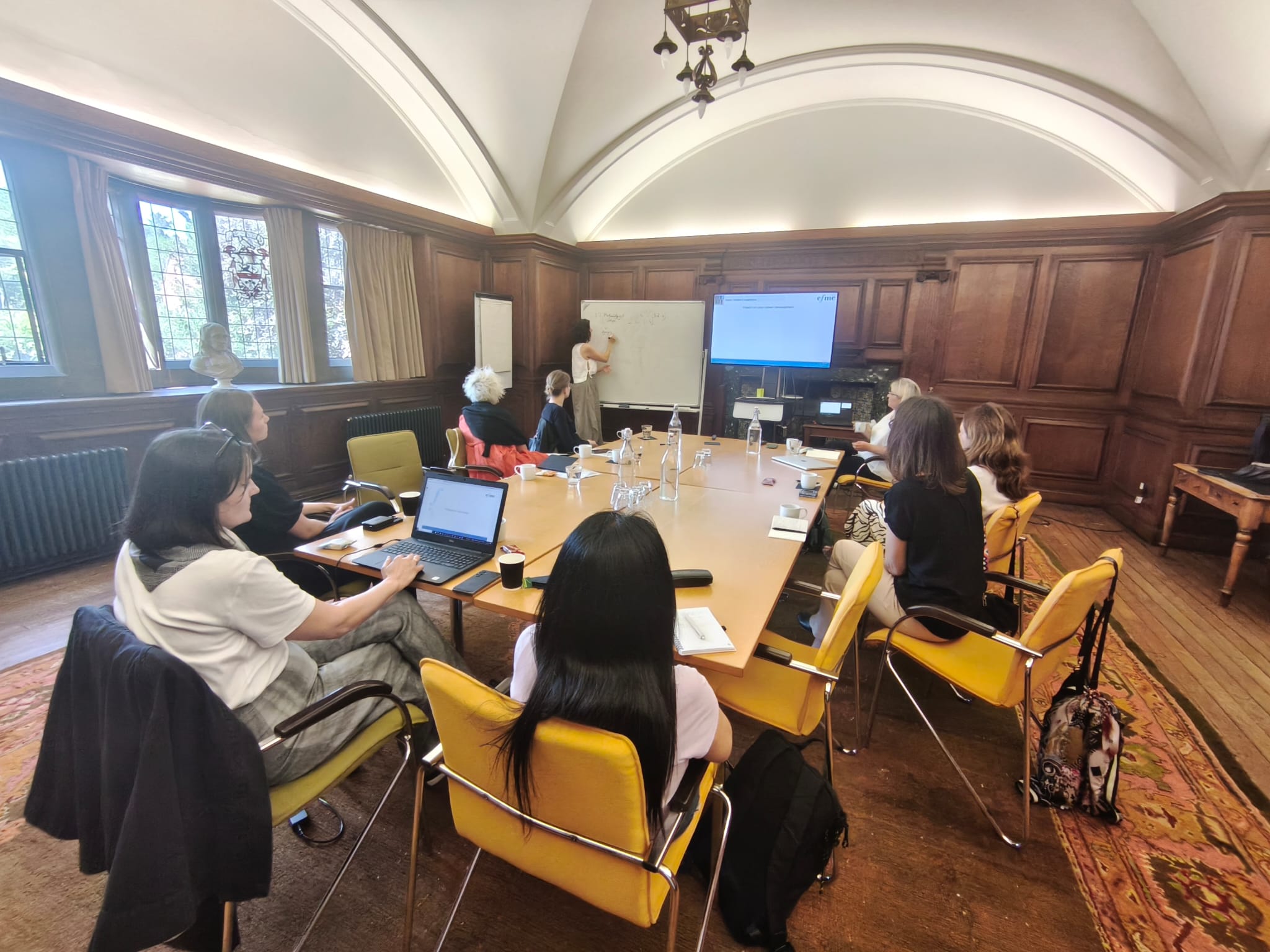
Last week I was in Cambridge delivering an MSCA workshop for research coordinators from different institutions together with Jitka Eryilmaz as part of my collaboration with EFMC – European Fund Management Consulting. During the workshop, we covered the different MSCA funding schemes, proposal development and many of the practical questions that arise when supporting applicants. One of the topics that generated the most discussion was how to design a strong MSCA training plan for Postdoctoral Fellowships (MSCA PF), an area that is often misunderstood but plays a central role in the proposal.
Many applicants approach this section by making a list of courses they would like to attend. Evaluators, however, are not looking for a catalogue of training activities. They want to understand why you need that training, how it connects to your research project and how it contributes to your longer-term career development.
I find it useful to think about the training plan as a simple three-step process:
- Start from where you are
- What knowledge, skills and experience do you already have?
This should be consistent with your CV and research profile. The idea is not to list everything you know, but to identify your current strengths.
- Identify what you need for the project
Look carefully at your methodology.
- What additional methods, techniques, data, tools or expertise will you need to carry out the project successfully?
These become the training needs directly linked to your research.
- Think beyond the fellowship
- Where do you want to be in three to five years?
The MSCA is designed to support career development, not only project delivery. Your training plan should therefore also address the skills and experience you will need for your next career step, whether that involves academia or another sector.
Link every activity to a purpose
Once the needs have been identified, each training activity should answer three simple questions:
- What skill or knowledge do I need?
- How will I acquire it?
- How will it benefit both the project and my future career?
This creates a coherent training plan rather than a collection of unrelated activities.
A strong MSCA training plan should normally include both project-specific research training and transferable skills such as project management, communication, leadership or supervision. The exact balance will depend on your project and career stage, but both dimensions should be visible in the proposal.
The training section is often underestimated, but it is one of the best places to demonstrate that the fellowship has been carefully designed around your development as a researcher. After all, the purpose of the training plan is not simply to help you complete the project, but to support your career development throughout and beyond the fellowship. When the training activities clearly respond to both the project’s needs and your longer-term career goals, the proposal becomes much more coherent.